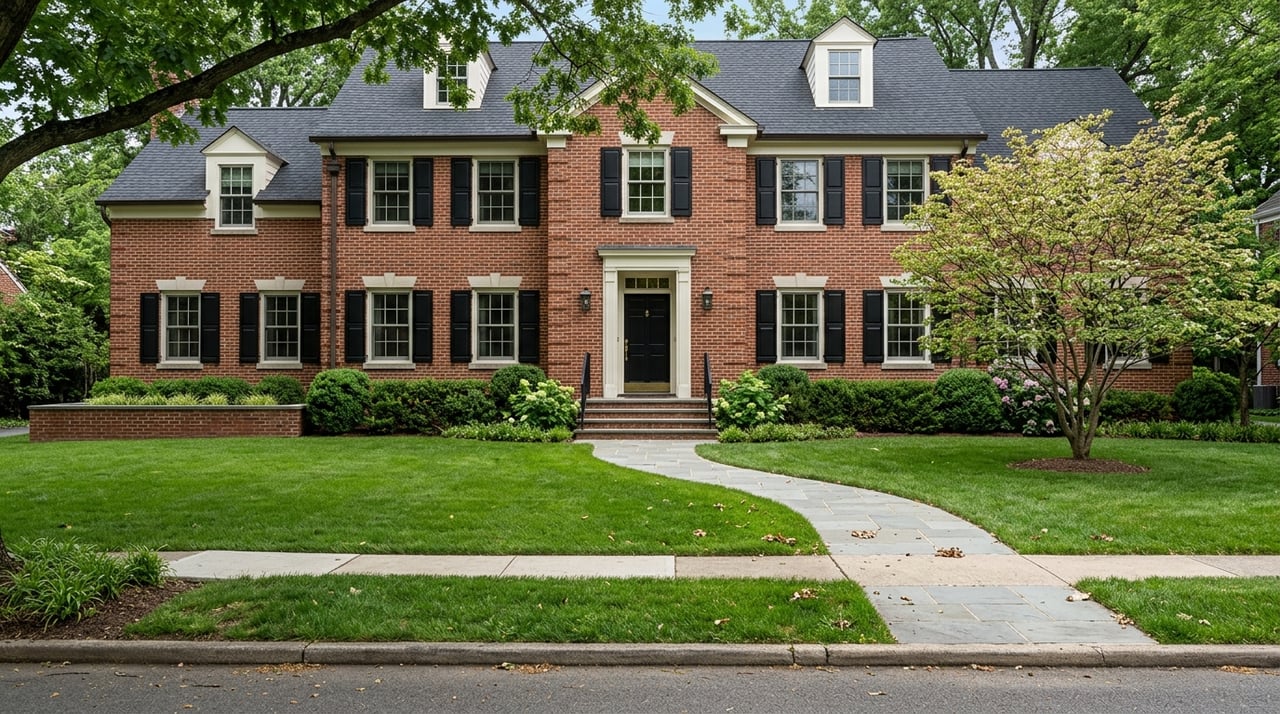
Luxury buyers often ask the same question in Potomac: why do two homes with similar square footage command very different prices? The answer is that Potomac is not one uniform market. It is a collection of smaller, highly specific micro-markets shaped by location, lot size, housing era, privacy, and property-specific details. If you are buying or selling here, understanding those differences can help you price more accurately, negotiate more confidently, and make better long-term decisions. Let’s dive in.
Why Potomac Works as Micro-Markets
Potomac is best understood as a mature, mostly built-out luxury area rather than a single neighborhood with one pricing pattern. According to Montgomery Planning, the Potomac subregion has evolved as a semi-rural and suburban area with a green character, and it is already about 93% developed. That matters because when an area is largely built out, buyers often compete over nuance rather than sheer new supply.
The geography also reinforces this point. The Potomac Census Designated Place and the Potomac planning area are not exactly the same size, which is one reason broad averages can miss what is happening on a specific street or in a specific enclave. In a luxury market like this, neighborhood-level and even block-level differences often tell you more than a ZIP code summary.
Potomac's Luxury Foundation
Potomac already starts from a strong luxury baseline. In the 2020-2024 ACS, 84.8% of occupied homes were owner-occupied, the median owner-occupied home value was $1,157,000, and 65.2% of owner-occupied homes were valued at $1 million or more, according to Maryland's ACS profile for Potomac. Low vacancy at 2.9% and high same-house residency at 90.8% also support the area’s low-turnover feel.
The housing stock adds to that profile. The same ACS data shows that 71.4% of units are detached homes, 58.2% have nine rooms or more, and 70% have four or more bedrooms. In practical terms, many homes already meet the size expectations luxury buyers want, so the next layer of value comes from the details that separate one micro-market from another.
Location Drives Value Inside Potomac
One of the clearest dividers is convenience to Potomac’s commercial hubs. The Potomac Subregion Master Plan identifies Potomac Village as the commercial heart of the community, centered around Falls and River Roads, and notes that Potomac Village, Cabin John, and Montgomery Mall serve as the area’s three commercial centers. That means access to daily errands, dining, and services is concentrated, not evenly distributed.
Even within the same broad area, proximity can influence how a home feels and how buyers respond to it. A property near the village core may appeal to buyers who want easier access to shops and services, while another location may attract buyers prioritizing a quieter setting or more separation. In Potomac, convenience is not a blanket trait. It is highly local.
Lot Size Changes the Buyer Pool
Lot size is another major differentiator in Potomac luxury pricing. The master plan notes that many Potomac subdivisions were built with quarter-acre and half-acre lots, while some enclaves offer much larger parcels. That can create very different buyer reactions, even when two homes are similarly updated.
Larger lots often change the conversation from house size alone to privacy, outdoor use, and long-term flexibility. In a market where many homes are already substantial, land can become one of the most meaningful value drivers. Buyers are often deciding not just between houses, but between lifestyles tied to the land around them.
Avenel as a Distinct Example
Avenel shows how one community can function almost like its own submarket. County and planning materials describe it as an HOA community of about 900 homes in 13 villages, with 87 homes on two-acre lots, and note that its character is shaped by architecture, building materials, lot size, and home type. Those are not small details. They directly affect buyer expectations and perceived value.
In HOA communities, renovation flexibility can also play a role. County guidance notes that exterior changes generally require written approval, which means buyers and sellers should consider not only what a home looks like today, but also what may be possible tomorrow. In a luxury market, that kind of limitation or predictability can influence pricing just as much as finishes.
Housing Era Matters More Than You Think
A big share of Potomac’s housing stock was built decades ago, and that creates another layer of micro-market behavior. ACS data shows that 26.9% of homes were built in the 1960s, 25.4% in the 1970s, and 21.8% in the 1980s. Roughly three-quarters of the housing stock dates to those three decades.
For buyers, this means you are often comparing three versions of the same opportunity:
- Original-condition homes
- Renovated homes
- Replacement or substantially newer builds
That matters because luxury buyers do not value all square footage equally. A renovated 1970s home with an updated layout and strong finish quality may compete very differently from a similarly sized home that still needs major work. In Potomac, age alone does not determine value. Condition, layout, and execution often do.
Schools Influence Demand by Address
School assignment is one of the most important drivers of demand in Potomac, but it should never be assumed broadly. The research shows that MCPS materials identify Potomac Elementary in the Winston Churchill cluster, and Cabin John Middle School materials show Potomac, Seven Locks, Beverly Farms, and Wayside among schools in that cluster. The key takeaway is simple: Potomac is not one single school market.
If schools are an important part of your home search or resale planning, the assignment needs to be verified for the exact property address. Boundaries can change, and buyer demand often responds to those details quickly. For both buyers and sellers, address-level verification is more useful than relying on neighborhood assumptions.
Potomac Attracts Long-Term Owners
Potomac’s demographic profile also helps explain why micro-markets here can feel stable and deeply specific. According to U.S. Census QuickFacts, 24.2% of residents are 65 or older and 23.3% are under 18. That suggests demand comes from more than one life stage.
Some buyers are looking for a long-term home with room to stay in place over time. Others may be seeking a property that fits a growing household or a future downsizing plan without leaving the area. In both cases, people are often buying Potomac with a longer horizon, which can make turnover lower and micro-market patterns more persistent.
How to Evaluate Resale in Potomac
If you want to understand resale potential, broad averages should be your starting point, not your conclusion. Redfin reported that in February 2026, Potomac’s median sale price was $1.275 million, homes sold in about 31 days, and homes received two offers on average. That points to a competitive market for well-positioned homes.
But the more useful resale framework in Potomac is usually street-to-street, not countywide. Because the area is largely built out and much of the housing stock dates from the 1960s through the 1980s, buyers often pay premiums for factors like:
- Land quality
- Privacy
- Layout
- Renovation quality
- Address-specific school assignment
- Proximity to commercial centers
That is why two luxury homes with similar bedroom counts can have very different market outcomes. Potomac rewards precision. Accurate pricing and smart comparisons depend on understanding what buyers are actually paying for in that specific pocket of the market.
What Buyers Should Watch Closely
If you are buying a luxury home in Potomac, it helps to look beyond the headline features. A large house in a desirable ZIP code is not enough information on its own. You will want to compare not just size and finish level, but also the land, setting, surrounding homes, and location within Potomac’s broader geography.
A few practical questions can help:
- How close is the property to Potomac Village, Cabin John, or Montgomery Mall amenities?
- Is the lot size typical for the immediate area, or an outlier?
- Is the home original, updated, or effectively new?
- Are there HOA restrictions that affect future exterior changes?
- Has school assignment been verified for the property address?
Those questions can help you judge not just whether a home feels appealing today, but whether it is likely to hold value well over time.
What Sellers Should Keep in Mind
If you are selling in Potomac, the same micro-market logic should shape your preparation and pricing strategy. Buyers at this level tend to notice the differences between a polished, thoughtfully positioned property and one that relies too heavily on broad market averages. In a nuanced market, presentation and pricing discipline matter.
This is where local judgment becomes especially important. A seller needs to know whether the home’s strongest value story is about lot size, renovation quality, privacy, proximity to village amenities, or something more specific to the street and surrounding homes. The right strategy is rarely one-size-fits-all.
If you are considering a move in Potomac or the surrounding Maryland luxury market, working with Christine Basso Fitzgerald gives you a practical, high-touch advisor who understands how micro-market differences affect pricing, positioning, and negotiation. Whether you are buying, selling, or planning your next step, you deserve clear guidance grounded in the details that matter.
FAQs
What are luxury micro-markets in Potomac, MD?
- Luxury micro-markets in Potomac are smaller pockets of the area where home values and buyer demand vary based on location, lot size, housing era, privacy, renovations, and address-specific factors.
Why do similar luxury homes in Potomac sell for different prices?
- Similar homes can sell for different prices because buyers may value one property more for its land, privacy, layout, renovation quality, convenience to Potomac Village or other commercial centers, or verified school assignment.
How important is lot size in the Potomac luxury market?
- Lot size is very important because Potomac includes both quarter-acre and half-acre subdivisions as well as larger-lot enclaves, and that can significantly affect privacy, outdoor use, and long-term value.
How should buyers compare homes in Potomac, Maryland?
- Buyers should compare homes at the street and block level, focusing on location within Potomac, lot characteristics, condition, layout, HOA considerations, and property-specific school assignment rather than relying only on broad market averages.
What should sellers know about pricing a luxury home in Potomac?
- Sellers should know that pricing in Potomac works best when it reflects the home’s exact micro-market, including land quality, privacy, updates, and local buyer demand, not just the average price across the broader area.